Wednesday, September 23, 2009

Consciousness (8): From perception to interpretation

Number eight in my series of posts on consciousness. All the posts are indexed here.
----------------------------

The previous two posts were a tour of ambiguous visual stimuli. Let's use these data to generate ideas about consciousness. Ideally, these ideas will lead to prediction-generating hypotheses about consciousness and clarify the explanatory target for neuroscience.

Interpreting Necker
Let's jump-start our thinking with a familiar example: your experience of the Necker Cube (shown on the right). This time, try looking at it with one eye. You should still experience perceptual bistability.

People seem to naturally gravitate toward describing bistable perception as an alternation between two different interpretations of a stimulus. The psychologists that study bistable perception do the same. For instance, Suzuki and Peterson (2000) say:
Bistable displays are displays that afford at least two potential interpretations even though the physical displays remain unchanged. [...] At any given moment, only one interpretation of a bistable display is seen; over time, the two perceptual interpretations spontaneously and stochastically alternate.
How are we to interpret the view that the brain interprets a stimulus? Is it a metaphor? If so, is it useful? Let's start by considering the nature of interpretation more generally, independently of the issue of conscious perception.

What is interpretation?
In general, to interpret something is to determine what it means. We are probably most aware of the need for an interpretation when we encounter difficult bits of writing. What fan of JRR Tolkien hasn't struggled to interpret Bilbo's pronouncement to his fellow Hobbits, "I like less than half of you half as well as you deserve"? What the heck does that mean?

Interpreting a complicated text can be a painstaking process that often requires a good deal of specialized knowledge. People build careers on their ability to interpret confusing legalese, complex poems, or arcane works of philosophy. Some philosophers are infamous for the patience and charity required to construct an intelligible interpretation of their work. For example, the oft-revered philosopher Ludwig Wittgenstein (1922) wrote, 'The thing is independent, in so far as it can occur in all possible circumstances, but this form of independence is a form of connexion with the atomic fact, a form of dependence.' Most readers will probably agree that it is hard to interpret Wittgenstein's sentence, that the meaning is not transparent.

While our need to interpret text is most obvious when we encounter tortured prose, technically speaking we interpret even the clearest expressions. The meaning of the sentence, 'George Washington was the first President of the United States,' is fairly transparent to most Americans. That is, interpreting the sentence is effortless, given our background knowledge. For someone just learning English, or someone with no knowledge of the United States, the sentence's meaning will not be so clear. For some philosophers, the meaning of the above quote from Wittgenstein might seem transparent. Transparency of meaning is not an intrinsic feature of a chunk of text, but depends on the background knowledge we bring to the text.

We have to be careful, as some texts might not mean anything, or if they do it might not be worth the effort to decipher them. Chomsky (1957) produced the famous sentence, 'Colorless green ideas sleep furiously' as an example of grammatically well-formed nonsense. Of course, we could generate grammatically ill-formed nonsense too: 'Gorp dilettante achieve on.' Whether such strings are literally meaningless is an interesting philosophical question that we won't explore. I include this discussion partly to highlight that I have been throwing around the term 'meaning' without defining it, a point we will revisit in the next post.

So far I've focused on interpreting expressions in natural language. However, people also interpret paintings, dreams, medical test results, pretty much anything. Psychologists used to be quite fond of asking people to interpret random smears of ink on sheets of paper (the Rorschach test). While these cases are interesting, to keep the discussion more manageable, in the next post I'll focus on the analogies between perception and interpretation of expressions in natural language.

With this rudimentary understanding of interpretation in hand, in the next post we will consider ways in which perception and interpretation are similar. While I will ultimately eschew thinking of perception as literally identical to interpretation, it is an analogy worth mining for ideas about conscious visual perception.

References
Chomsky (1957) Syntactic Structures Mouton, The Hague/Paris.

Suzuki and Peterson (2000) Multiplicative effects of intention on the perception of bistable apparent motion, Psychological Science 11: 202–209.

Wittgenstein, L (1922) Tractatus Logico-Philosophicus (Ogden translation) Cosimo Classics.

------------------
Table of Contents of posts on consciousness.

Thursday, September 10, 2009

Consciousness (7): More Ambiguous Figures

The seventh in my series of posts on consciousness. All the posts are indexed here.
--------------------------------

In this post we'll finish the tour, started in the previous post, of ambiguous figures.

Motion
Some of the most compelling illusions include things that move. Indeed, every time we watch a movie we succumb to the illusion of apparent motion. As we saw in the previous post, a rotating Necker Cube evokes vivid bistability. The present group of ambiguous figures include moving parts that are essential for the illusion.

Ambiguous structure from motion
The following video looks like a cylinder rotating either clockwise or counterclockwise (its direction is bistable). There is no cylinder drawn in the video, just a bunch of randomly placed spots. The spots' motion is set to match the velocity they would have if painted on the surface of a cylinder, and this motion signal alone is enough to give the impression of a particular shape.


It sometimes takes more than 30 seconds for the percept to switch, so you might need to watch the movie more than once. I am able to make it reverse faster by rotating my finger around the bottom of the imaginary cylinder as if I were pushing it in a new direction.

Bistable See-Saw
In the following animation, the barbell-shaped object should look like it is flipping back and forth like a see-saw. Sometimes the see-saw crosses through the horizontal axis, and other times the vertical axis. You might even see the barbell rotating 'round and 'round in a circle, though in my experience this is rare.

ambiguous dumbell

I lock in fairly strongly to the horizontal see-saw, but when I cover up the bottom half of the image for a few seconds, this brings out the other percept.


One Plaid or Two Gratings?
Stare at the black dot in the following animation. While initially you probably see a plaid pattern moving upward, you will eventually see two translucent sinusoidal patterns (often described as 'gratings') sliding past one another. It took me almost 30 seconds the first time before the percept switched, so stick with it.

One plaid or two gratings?


The Spinning Girl
One of my favorite illusions. This beautiful ballerina was created by Nobuyuki Kayahara. In which direction is the ballerina doing her pirouette? Most people see her rotating clockwise initially, but the stimulus is actually ambiguous, so you can also see her rotating counterclockwise.


If you have trouble getting her to switch directions, cover her body and look only at the shadows at the bottom of the image. With the number of cues reduced, you should be able to see the shadow change direction. Once that happens, slowly lift your hand while maintaining the new direction of rotation to reveal the new pirouette direction.

This illusion has been misinterpreted as a test of handedness, or a test of whether you are right-brained or left-brained. There is no evidence for these claims, and I'm not sure where the rumors originated.


Binocular rivalry
Binocular rivalry has been a workhorse for the study of consciousness. This is partly because, in addition to the extensive psychological studies of binocular rivalry, neuroscientists have locked onto rivalry as a model for the study of the neural basis of consciousness. While we'll look more deeply at rivalry in future posts, for now we'll treat it as just another cool bistable percept.

To experience rivalry in the following image, put a piece of paper perpendicular to the screen between the two images, so your left eye sees the face and your right eye sees the house (your face should be about six inches from the screen). Be sure to fuse the checkered circles in the center of each figure. Once you obtain fusion, hold it for a while and you will experience rivalry.


Most people do not see a simple fusion of the house and face, but rather the patterns alternate. For instance, you might see the house for a few seconds, and then the face will dominate for a while, and so on. That is binocular rivalry. During transitions, the new percept will spread across the old in a kind of traveling wave, in which case you might see a dynamic quilt-like pattern.


Ambiguous forms
In this class of ambiguous figures, perception alternates between often drastically different types of objects (e.g., face and vase). These illusions are probably better known than all of the others. They are used in advertisements and art, and there are so many on the internet that I can only show a tiny sample. I won't say much about them, as the titles suggest what the two objects are supposed to be, and most of them aren't very difficult to see.

Vase versus Face
The old standby in every introductory psychology textbook.


Duck versus Rabbit
Another classic. I like the following version (from Torrey (1970)) because the two interpretations seem equally likely.


Wife/Mother-in-law and Husband/Father-in-law
On the top is a beautiful young socialite and a nasty witch-like banshee. Below is a handsome gadabout and a wretchedly distasteful lecher.


Chef versus Dog
Tilt your head to the left to see the dog, and to the right to see the goofy French chef.


Nude woman versus Reagan face


Kissing Jesters
It alternates between a single jester facing you, and two jesters facing each other, their lips lightly touching.

Gypsy versus Narcissist
The top of the image shows the ambiguous version, while the bottom shows disambiguated versions (gypsy on the left and narcissistic woman looking into the mirror on the right).

Man's face or Woman Reading?
Our last figure. I would be remiss, in a tour of ambiguous forms, if I didn't pay homage to the great surrealist Salvador Dali. His paintings are filled with beautiful and sometimes hauntingly plastic forms. The following painting, 'The Image Disappears,' was painted by Dali in 1938.


It seems somehow appropriate to let Salvador Dali be the last stop in our tour of ambiguous figures. If you have any favorites that I haven't included, please let me know in the comments or via email.

Where we are headed
While ambiguous images are intrinsically cool, they also provide a window into the nature of visual consciousness. Based on these illusions, in the next post I'll make some general hypotheses about the nature of (visual) perception. These hypotheses will give us a target for the neuronal data, to which we will then turn.


Sources of Illusions
The structure-from-motion demo is supplementary material in Krug et al. (2008). The Bistable See-Saw is adapted from the ambiguous quartet illusion, which was described by Ramachandran and Antsis (1985) (a tactile version is described in Carter et al. (2008)). The plaid/grating illusion is from Stoner et al (1990). The Spinning Girl was created by Nobuyuki Kayahara, who works in digital design. The house-face image used for binocular rivalry is from Tong et al. (1998). Vase/face goes back to Rubin (1915), but the one here is from Fischer (1967). The duck-rabbit was published originally by Jastrow (1899), but the one here is from Torrey (1970). The mother-in-law/wife image was originally published by Hill (1915), and the husband/father-in-law was originally published in Botwinick (1961). Kissing Jesters is from Fisher (1967). Chef/Dog is from Wallach and Austin (1954). Nude/Reagan is from Fisher (1968), a paper that shows 30 ambiguous forms from the history of psychology. Gypsy/Narcissist is from Fisher (1967).


References
Botwinick (1961) Husband and father-in-law: A reversible figure. American Journal of Psychology, 74: 312-313.

Carter, O, Konkle, T, Wang, Q, Hayward, V, and Moore C (2008) Tactile Rivalry Demonstrated with an Ambiguous Apparent-Motion Quartet. Current Biology 18: 1050-1054.

Fisher, G (1967), Measuring Ambiguity, American Journal of Psychology 80: 541-557.

Fischer, G (1968) Ambiguity of form: Old and new. Perception and Psychophysics 4: 189-192.

Hill, We (1915) My wife and my mother-in-law. Puck November 6.

Jastrow, J. (1899) The Mind's Eye. Popular Sci. Monthly, 54: 299-312.

Kristine Krug, Emma Brunskill, Antonina Scarna, Guy M Goodwin, Andrew J Parker (2008) Perceptual switch rates with ambiguous structure-from-motion figures in bipolar disorder. Proc. R. Soc. B, 275: 1839-1848.

Ramachandran, V.S., and Anstis, S.M. (1985). Perceptual organization in multistable apparent motion. Perception 14, 135-143.

Rubin, EJ (1915) Synsopleved Figurer: Studier i psykologisk Analyse. [If anyone has the full reference please let me know]

Stoner, GR, Albright TD, and Ramachandran VS (1990) Transparency and coherence in human motion perception. Nature 344: 153-5.

Tong, Nakayama, Vaughan, and Kanwisher (1998) Binocular rivalry and visual awareness in human extrastriate cortex, Neuron 21: 753–759

Torrey, CC (1970) Trace Localization and the Recognition of Visual Form. The American Journal of Psychology, 83: 591-600.

Wallach, H, and Austin, P (1954) Recognition and the localization of visual traces. Am J Psychol, 67:338-40.

-----------------------------------
Table of Contents of posts on consciousness.

Saturday, September 05, 2009

Consciousness (6): Reversible Figures

The sixth in my series of posts on consciousness. All the posts are indexed here.

Background: Why do we need psychology?
Instead of just diving into the neural data, let's take some time to examine our target, consciousness. Clarifying the features of conscious awareness will provide a more precise target for our neuronal theories.

The ultimate goal is to develop an understanding of consciousness at both the neuronal and psychological levels. The two approaches should coevolve until they fit together as nicely as our ideas about trait inheritance and DNA, as well as our ideas about action potential generation and single channel biophysics.

To flesh out the analogy with inheritance/DNA, let's consider the work of Gregor Mendel. By controlling the reproduction of different strains of pea plants, Mendel was able to measure many features of inheritance well before anybody had heard of DNA. His work provided an explanatory target for molecular biologists who unraveled the mechanisms only much later. Similarly, psychologists have gained quite a bit of knowledge of consciousness by simply studying consciousness, knowledge gained without focusing much at all on the specific neuronal mechanisms involved.

There are literally thousands of psychological experiments and clinical studies that reveal interesting features of consciousness. Obviously, we'll only be able to look at a tiny subset of these data. This means I'll need to curate the data with some caution: I must be wary of cherry picking, or focusing only on data that lets me push some pet theory. The right approach toward any pet hypothesis is to try to kill it with data. We should actively seek out falsifying evidence, not data that confirms what we already believe.

We have to start somewhere in this galaxy of data, so let's begin with a set of illusions that has entertained and puzzled psychologists, and the general public, for nearly 200 years: ambiguous stimuli. I start with them partly for their cocktail party value, but also because they are an excellent gateway into the psychology of conscious perception.


Ambiguous Visual Stimuli and Bistable Perception
A stimulus is ambiguous when it can evoke different percepts. That is, even though the stimulus is unchanging, our experience of the stimulus oscillates between two "interpretations." The alternating perceptual experiences are known as bistable percepts. (If this is confusing, hold on: many examples are coming up).

In this post I'll focus on cases in which the percepts switch back and forth between two identical objects (e.g., two cubes) that are seen from two different perspectives. They are often called 'reversible figures.'


Necker cube
The Necker Cube is probably the most famous reversible figure. It was first discussed in print in 1832 by a Professor of Minerology, LA Necker (Necker, 1832). The Necker Cube is at the top of the following figure. Looking at the line drawing tends to evoke alternating experiences of two cubes. These cubes are shown, in an unambiguous form, below the Necker Cube.


Perceptually, one of the cubes appears to come out of the page pointing down toward the left (the pink cube on the left), while the other cube appears to come out of the page pointing up to the right (the pink cube on the right).

While most people's visual system automatically generates a percept of one of the cubes (an amazing fact in itself), some people tend to stay locked into one interpretation. That is, they don't spontaneously experience bistability. If this is you, just keep staring and your percept will eventually switch. The longer you look at a reversible figure, the more frequently the perceptual alternation will occur.


Reversible Steeple
It is relatively easy to generate ambiguous drawings similar to the Necker Cube: make a line drawing of an arbitrary 3-D polygon and it is likely to generate bistable percepts. For instance, here is a five-sided solid, the Reversible Steeple:

One of the steeples points toward you (with the rectangular base further away), while the other points away (its base will be closer to you).


Schröder's Staircase
The following figure should appear as a set of steps with either the blue or the pink "wall" closer to you.


When the red wall is closest, it seems you are looking at a staircase from above (the more standard perspective such as when you are approaching a set of stairs to climb). When the blue wall appears closest, it will seem as if you are looking up at a staircase from underneath, or an upside-down staircase, or an overhanging unfinished brick wall (the latter two descriptions are from Wallin's book).


Plush Chair
You can imagine the following is one of those plush velvet chairs with brass buttons on the front and back.


One percept is of a chair facing you: you see the chair from above with the backrest facing you and the seat of the chair is coming out toward you. The other percept is of a chair facing away from you: you see the chair from below, with the back of the backrest facing you and the seat is going away from you.


Inverting Hairbrush
It appears to be a hair brush. It can appear either with the bristles facing you, or the bristles facing away.


Scripture's Blocks
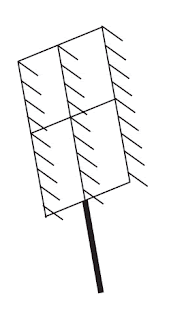
This is one of my favorite reversible figure in this post, one of the more vivid cases of bistability. The image should appear as a set of long rectangular blocks stacked upon each another.


In one percept, each block is oriented down to the left, capped on the bottom by a white face. The hatched shading is the top surface of each block. In the other percept, each block is oriented up to the right with its white face at the top. In this case, the hatched shading coats the front surface of each block.


The scope of perceptual reorganization
I'll finish by illustrating the deep and sometimes startling nature of the perceptual reorganization during alternation. We'll look at two modifications of the Necker Cube.


Arrowhead Cube
I've placed two arrows on the "surface" of the Necker Cube below. Consider two questions. Are the arrows on the inside or outside surface of the cube? In what direction are the arrows pointing? As you probably guess, the answer depends on which cube you see!


When you see the down-left cube, then the arrows appear on the outside of the cube, and seem to point toward you. However, when you see the top-right cube, they appear to be painted on the inside surface of the cube, and to point backwards away from you.

Somehow, when the brain alternates between cubes, it takes note of additional features of the cube and integrates them into the percept in an appropriate way. It does this without you having to think about it, without you consciously knowing how you do it.


Rotating Necker Cube
The final bistable percept is my favorite of the bunch, the Rotating Necker Cube. It is a picture of a cube that is rotated by the same amount (in the same direction) with each time step. You should see a rotating cube. Does the cube still show bistability even when rotating?


Not only does the Rotating Necker Cube still alternate, but when it alternates it reverses its apparent direction of rotation! Once the percept switches, our visual system interprets the exact same movement as rotation in the opposite direction.

I will be devoting a future post to the Necker cube, as it is such a rich source of ideas and data.


Where we are headed
In the next post (maybe even two) we'll continue looking at ambiguous stimuli. This post has been a quick list of reversible figures, without much theory or discussion of consciousness. We will ultimately use these illusions to brainstorm about the nature of visual consciousness. Then we'll have something more precise that we can target from a neuronal perspective.


Philosophical dessert
Just as Mendel's laws were consistent with many possible molecular mechanisms, these visual illusions are consistent with any number of lower-level neuronal explanations. For that matter, the illusions considered in isolation are consistent with dualism (roughly speaking, dualists believe that the mind is not part of nature, that it is a different kind of thing altogether such as a soul). Illusions provide useful data that all people (not just neurophiles like myself) interested in consciousness should struggle to explain. Dualists of the world, get off of your armchairs!

Original Sources of Illusions
The Reversible Steeple is adapted from John Wallin's wonderful monograph Optical Illusions of Reversible Perspective published in 1905 (it is available free at Google Books). Schröder's staircase was first published in Schröder (1858). I got the idea for coloring the two walls of the staircase from planetpurplex.com, a site full of optical illusions. The Inverting Hairbrush and Plush Chair are both adapted from Wallin (1905). Scripture's blocks were introduced by Scripture (1897), though the figure used above is taken from Wallin (1905). The Arrowhead Cube is adapted from Mason et al. (1973).

I am not sure who first noticed bistability in the Rotating Necker Cube. If anyone knows the background, please let me know. Wallin (pages 46-47) says Wheatstone looked at moving Necker Cubes, but it seems Wheatstone just held wire cubes in his hand and contemplated them while he moved them about (see Wheatstone (1838)). Neither Wheatstone nor Wallin remarked on the apparent reversal of rotation, so the first observation was likely after the publication of Wallin's monograph in 1905.

References
Mason, J, Kaszor, P, and Bourassa, C.M. (1973) Perceptual structure of the Necker cube. Nature 244: 54-56.

Necker, LA (1832) Observations on some remarkable Optical Phænomena seen in Switzerland; and on an Optical Phænomenon which occurs on viewing a Figure of a Crystal or geometric Solid. The London and Edinburgh Philosophical Magazine and Journal of Science (3rd Series) 1, No 5, 329-337.

Schröder, H (1858) Über eine optische Inversion bei Betrachtung verkehrter, durch optische Vorrichtung entworfener physischer Bilder. Annalen der Physik und Chemie 181: 298-311. [Note last name sometimes spelled 'Schroeder' or 'Schroder']

Scripture, E.W. (1897) The New Psychology. Walter Scott Ltd, London.

Wallin, J.E.W. (1905) Optical Illusions of Reversible Perspective: A volume of historical and experimental researches. Stanton Call Press, Stanton IA.

Wheatstone, C (1838) Contributions to the Physiology of Vision.—Part the First. On some remarkable, and hitherto unobserved, Phenomena of Binocular Vision. Philosophical Transactions of the Royal Society of London, 128: 371 - 394.

---------------------------------------
Table of Contents of posts on consciousness.

Friday, August 28, 2009

The Necker Prism

To prepare the next installment in my series on consciousness research, I've been studying the Necker Cube. Little did I know that the cube was actually a prism that displays the main threads of perception research since 1833. An entire book could easily be written about this simple little line drawing. Despite all the research, there are still basic questions about the cube that haven't been addressed experimentally. I'll post what I've learned in the next couple of weeks.

Sunday, August 16, 2009

Consciousness: Table of Contents

This post will be a permanent placeholder for links to all of my consciousness posts. It will expand until I finish posting on the topic.

(1) Creationists take aim at consciousness: It begins by mentioning that the Creationists have finally discovered consciousness, but mostly focuses on why real scientists should take consciousness seriously as an object of (scientific) study.

(2) Introducing Mr B: A look at the methods of your garden-variety biologist, and what distinguishes a biological approach from other perspectives (like that of the physicist).

(3) Mr B's first take on consciousness: In his first look at the evidence, Mr B concludes that neuronal processes are necessary and sufficient for consciousness in humans.

(4) Leveling with Mr B: We examine the different spatial and temporal levels of organization in the nervous system, and pinpoint the levels most relevant for consciousness.

(5) Switching Voices: Discusses the reasons I will begin referring to Mr B in the first person.

(6) Reversible Figures: Shows and discusses several reversible figures to illustrate perceptual ambiguity and bistable perception.

(7) More Ambiguous Figures: finishing our tour of ambiguous visual stimuli.

(8) From perception to interpretation: starts to explore the claim that perception involves stimulus interpretation. Focus is on determining just what interpretation is.

(9) From texts to the grotesque cinema: to help make precise the claim that perception is stimulus interpretation, we examine the question, 'What is a stimulus?' in some detail.

(10) Contents and Vehicles: starts exploring the analogies between linguistic interpretation and visual perception. First up: there is a content/vehicle distinction.

(11) Ambiguity and context: a continuation of post 10. I examine ambiguity and contextual influences in perception and language interpretation.

(12) What the brain thinks it knows: continuing the previous two posts. I examine the effects of background knowledge and assumptions in perception and language interpretation.

(13) The interpreter versus the scribe: summary of the view that perception is stimulus interpretation.

(14) Interpretation mechanics: Discussion of the view that perception involves unconscious inference. Representations introduced.

(15) Opening the time capsule: quotations, from some great thinkers, that tie together the previous nine posts.

Thursday, August 06, 2009

Consciousness (5): Switching Voices

An intermezzo in my series of consciousness posts. It's been a while since I posted, so I needed to oil the chain.

In conversations about consciousness, the voice of the garden-variety biologist (Mr B) often gets drowned out. This is typically due to blithely confident philosopher-types who act as if the armchair provides just as much authority as the lab bench when it comes to consciousness. Equally perplexing is that some folk's confidence actually becomes bolstered by the paucity of theoretically significant experimental results about consciousness. A lack of data makes good scientists less confident, not more confident, about a topic. (There are interesting parallels with creationism here.)

I am happy to start by inverting this antiscientific bias about consciousness. In that spirit, I will grant Mr B sole control of the lectern until he has finished saying what he has to say. Only then will I entertain questions from those armchair pilots who believe they have deadly objections to Mr B's project. At that point we will be better posed to see if they are right.

While I am not Mr B, for the above reasons I do consider myself his advocate. Because it is becoming a distraction to talk about him in the third-person, I will simply speak in his voice for a bit. Because confusion is likely to follow such a grammatical shift, this post will serve as a handy reference (especially for those tempted to bemoan my ignorance of what the philosophers have (putatively) contributed to our understanding of consciousness).

Next up, we'll get back to the science.

Wednesday, February 25, 2009

Nature Trifecta

A big day for systems neuroscience in Nature yesterday: three papers! Each paper investigates a different question about synaptic organization in the cortex. Not one paper created a new word ending in '-omics,' an auspicious sign.

I superficially describe the main results from each paper below, with some figures.

First, Brown and Hestrin bring us Intracortical circuits of pyramidal neurons reflect their long-range axonal targets. After fluorescent labeling of corticocortical (CC), corticostriatal (CS), and corticotectal (CT) pyramidal cells in cortex, they sliced the mouse brain and patched onto as many as four of the cells in layer five of V1 to measure the probability of cells synapsing onto cells of the same type (and later in the paper, different types).

They found distinct patterns of connectivity for the different cell types (see Figure). For instance, while 20 percent of the CS cells were connected monosynaptically, CT pyramidal cells only hooked up with one another about five percent of the time. They further showed this wasn't merely because some cells are more promiscuous than others (though they didn't show this for CS neurons).

Next up was a paper from Murayama and others in Larkum's group titled Dendritic encoding of sensory stimuli controlled by deep cortical interneurons. They loaded layer V cells in rat somatosensory cortex with calcium indicator, and then imaged layer 1-3 calcium activity during hindlimb stimulation. The supragranular signals represent activity solely in the apical dendrites from the loaded Layer 5 pyramidal cells. Via various pharmacological manipulations (often involve injecting more boluses into layer V), as well as in-vitro patch clamps, they support the claim that a particular type of inhibitory interneuron in layer V suppresses dendritic calcium levels. Then, using triple patch clamp (two neighboring layer V pyramidal cells, and one of their dendrites), they showed that stimulating one of the cells produced dendritic inhibition in the other cell via a disynaptic connection.

Of the three papers, this would be the best one to present in a journal club because it is fairly complicated and hard to understand on a quick once-through. A journal club audience would appreciate you doing the work for them. Frankly, I still haven't thought through the logic of all their experimental manipulations.

Third, from Petreanu and others in Svoboda's group is The subcellular organization of neocortical excitatory connections. It was only a matter of time before the channel rhodopsins spawned acronyms. In this quite elegant paper they described their application of sCRACM [subcellular ChR2-assisted circuit mapping] to determine the spatial organization of axodendritic synapses onto neurons in somatosensory cortex of mice. They did this in slices in which particular areas expressed channel rhodopsin ChR2. For instance, they expressed ChR2 in the VPM nucleus of the thalamus, which carries information to the whisker barrels in S1. Then they could stimulate the axons of the VPM neurons with a laser to find its postsynaptic targets.

They patched onto a cell in S1, and would then laser-stimulate the channelrhodopsin-expressing axons in the vicinity of the patched neuron. When the HH channels were blocked, a laser pulse on a ChR2-expressing axon would still generate PSPs in the postsynaptic cell. The spatial resolution of the mapping was approximately 60 um2, so they were able to map the distribution of synapses with decent precision. The figure accompanying this paragraph is an activation map of a layer 5B pyramidal cell in which the ChRs were expressed in the VPM nucleus of the thalamus. Most of the VPM->S1 synapses occur in Layers IV and VB, though there is some activity in supragranular layers.

The second and third papers use very cool methods to achieve fairly unsurprising results. The first paper used more common methods, but the results were a bit more interesting (i.e., less predictable). All in all, a good week for synapses.

Friday, February 13, 2009

Happy Birthday, Darwin

Why not read something cool about evolutionary biology in honor of one of our greatest naturalists?

Some good online reading:
*Darwin: an online exhibit from the American Museum of Natural History.
*15 Evolution Gems: beautiful piece put together by Nature discussing 15 papers published in their journals that provide striking examples of evolutionary thinking. Unfortunately no figures.
*Evolution 101: A nice introductory course put together at Berkeley.

Good books:
*Frogs, flies, and dandelions: a book that focuses on what we know, and don't know, about speciation.
*How and why species multiply: a great book on speciation using Darwin's finches as a case study. Written by two monsters in the field.
*Evolution of Nervous Systems: an amazing four-volume set edited by Kaas. Too expensive to buy, but you should be able to find chapters online through your library. Check this link to see if you have access from your IP address.
*Endless forms most beautiful: a wonderful introduction to the hot new science of evo-devo (evolutionary developmental biology).


Friday, January 23, 2009

Consciousness (4): Levelling with Mr B

Mr B has hypothesized that the brain is necessary and sufficient for conscious experience in humans (and probably other animals). The brain, unfortunately for Mr B, is an incredibly complex object. It consists of multiple interdependent processes that operate across different spatial and temporal scales.

Spatial scales in the brain
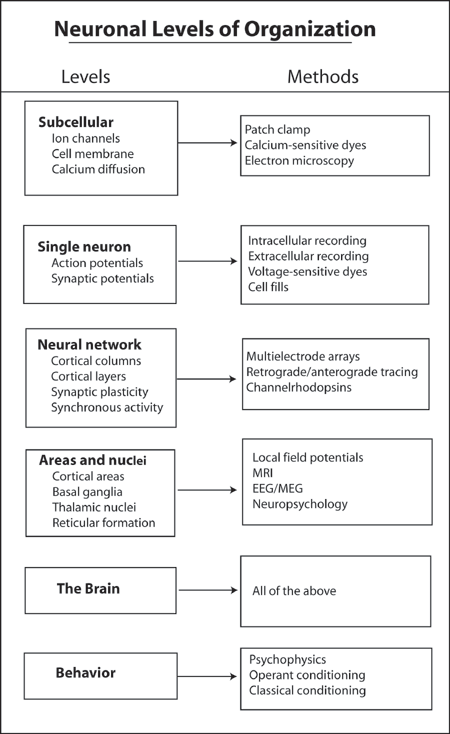
The left-hand side of the figure below lists neuronal processes that operate at different spatial scales (spatial scale increases as you go down the figure). Associated with each level of organization are experimental techniques typically used to access the phenomena at that level. A few of these techniques are listed to the right of each level.


Measurements at a lower-level are often used to help illuminate what is going on in higher levels. For instance, there are many studies that correlate single cell responses with behavior. A detailed anatomical characterization of individual cells slowly builds up a picture of the distribution and abundance of neuronal cell types in the entire brain.

While the techniques used at higher levels typically don't reveal the details of the lower-level processes (e.g., fMRI does not tell you what is happening in an individual neuron), the data from higher levels do provide useful clues about the functional roles of the lower level phenomena. For instance, behavioral studies can suggest how individual motor neurons help to govern behavior. This is important because, as we discussed before, part of Mr B's job as a biologist is to discover the function of the mechanisms he is studying. Just as you won't understand the biological role of sperm by focusing narrowly on how a sperm locomotes, it is not possible to understand the function of an individual neuron without studying its role in the neural network in which it is embedded, and ultimately the role of this network in behavior.

Temporal scales
As spatial scales increase, the relevant temporal scales also tend to increase. This is because the higher-level processes emerge from the interaction of many events at lower levels. For instance, a single action potential lasts about a millisecond, so network dynamics take place on longer time scales (network dynamics require presynaptic action potential propagation, neurotransmitter release, and postsynaptic responses often in a large number of neurons).

Note this positive correlation between spatial scales and temporal scales is not a hard and fast rule. There are lower-level molecular processes that can take longer than minutes to unfold, for instance.

At what level is consciousness?
At what level(s) of organization should Mr B begin his investigation of consciousness? This is not something that can be decisively answered a priori. He needs to dive in and do some experiments to discover the spatiotemporal organization of processes in the conscious brain. We will visit many of the techniques and levels of organization in the above chart as we follow Mr B.

However, Mr B knows enough neuroscience to form tentative hypotheses about the levels of organization required for consciousness. For instance, it is quite unlikely that a single neuron is sufficient for consciousness. This would be a brittle way to build an important process into the brain. This means that we should be looking at the level of the neural network or higher for the neural signatures of consciousness.

On the other hand, we know that the entire brain is not necessary for consciousness. People lose bits of their brain all the time (e.g., car accidents and strokes) without losing consciousness. Further, it is clear that behavior isn't constitutive of conscious experience. We can be paralyzed by curare but still conscious, and when we dream our motor system is effectively shut down but we still have experiences.

Hence, somewhere between small neural networks and areas/nuclei in the levels chart are the most likely candidates to find processes essential to consciousness. This suggests the time-scales of the processes should be relatively long (i.e., longer than the millisecond scale at any rate).

Minimal basis for consciousness
Mr B can use the above discussion to put a finer point on his working hypothesis from the previous post (namely, the brain is necessary and sufficient for consciousness in humans). Because the entire brain isn't necessary and sufficient, there must be some subset of the brain that is. It could be a certain set of cortical areas and subcortical nuclei. It could be the entire cortex, or perhaps just the brain stem. We just don't know right now. But what Mr B is after is this minimal subset of neuronal processes that is necessary and sufficient for consciousness.

Behavior and consciousness
Perhaps paradoxically, while Mr B doesn't think behavior is constitutive of consciousness, the most direct experimental indicators of consciousness he has are behavioral. That is, the best way to find out if someone is aware of something is to ask them if they see (or feel, or hear) it. There is presently no foolproof neuronal measure of conscious experience. While Mr B does think that such a measure should exist, it is something we will have to discover by doing the science.

The good news and the bad news for Mr B
That consciousness seems to be a higher-level phenomenon makes it both easier and harder to study. Mostly harder. The good news is that most of the techniques targeted at lower levels can be used to study consciousness, such as single cell recordings. And of course, those techniques developed to record larger-scale activity, such as fMRI, may also be revealing. This is useful because such techniques are noninvasive and can readily be applied to humans.

That consciousness is a relatively high-level phenomenon has an obvious down side: it is likely incredibly complicated. We don't even understand how the motor cortex controls limb movement, a relatively simple phenomenon. It will take a herculean effort over many decades to develop the empirical infrastructure required to establish a consensus about how the brain is conscious.

In the next post, I'll switch voices and then we'll start in on ambiguous stimuli.

Wednesday, December 17, 2008

Consciousness (3): Mr B's first look at consciousness

Now we'll look at how your garden-variety biologist (Mr B) approaches the phenomenon of consciousness. For now, we'll have him treat it as he would any other biological phenomenon.

Recall that Mr B takes a naturalistic, empirical approach to things. His first order of business is to determine what variables are correlated with conscious states (just as he did with action potential generation). We'll focus mostly on conscious perception of external events (e.g., seeing a sunset), so as to avoid the complexity of things like consciousness of one's thoughts (e.g., the experience of thinking about a chess move).

Mr B does not focus narrowly on experiments that tell us about the neural basis of consciousness, but also on experiments that reveal important details of the structure of consciousness itself and its relationship to external stimuli (i.e., psychophysics). The more empirical constraints, the better. It is possible to learn a great deal about respiration without knowing anything about the respiratory system: you can learn how the inputs (composition of air breathed) and outputs (exhaled air) relate to one another, and to other variables such as the blood pressure and breathing rate of the organism. Hence, learning about a biological mechanism doesn't mean focusing in on that mechanism exclusively: much can be learned by studying its products, how it is perturbed by inputs, etc..

The brain is necessary for conscious experience
At the grossest and most obvious level, Mr B notes that the only organ necessary for consciousness is the brain. Contrary to the Greeks' heart-based theory of mind, he knows people have literally lived without hearts, perfectly conscious, for months (article here). You can lose kidneys, arms, your stomach, etc, and while you may not be healthy or happy, you will still be conscious. Conversely, if you inactivate a brain with an anesthetic, the loss of consciousness will be quite dramatic.

The brain is sufficient for conscious experience
Take a powerful hallucinogen and entire new experiences are evoked endogenously. Something similar seems to happen while dreaming: a world is experienced that is largely independent of present sensory inputs. Amputees often feel that the removed limb is still present, moving around, making gestures, in the well-known 'phantom limb' phenomenon (this has been shown to not be due to irritation of the nerves at the end of the severed limb).

In all such cases, we experience a world that is not actually there. So the brain in effect constructs the experience. Some might like to say that the brain builds a 'representation' or 'simulation' or 'virtual reality model' of the world, and this is what we experience. Mr B may slip into such (often metaphorical) language, but for now he just means that experience is a neural construction, which is a more neutral way to put things (though note by saying it is a 'construction' he doesn't mean to imply it is a "mere construct" with no validity).

Note this hypothesis already generalizes beyond the data: Mr B is assuming that perceptual experience during normal waking periods is generated by similar mechanisms to those used during sleep, hallucinations, and phantom limbs. Mr B realizes this could be a mistake, but as a provisional hypothesis, it seems reasonable, especially given the existence of illusions generated even in healthy brains (we will have more to say about illusions later).

Implicit in the hypothesis that experience is a neural construct is the claim that neural processes of a certain sort (to be determined) are not just necessary, but sufficient for experience. Given his general biological approach, it seems a conclusion almost forced upon Mr B.

In the next post, we'll continue to follow Mr B in his quest to understand consciousness. He'll see just how complicated a problem he has taken on.

Tuesday, December 09, 2008

Consciousness (2): Introducing the garden-variety biologist

This is the second of my ongoing discussion of biological approaches to consciousness and creationists' recent attacks on such approaches. In this post I sketch a portrait of a fictional character, a garden-variety biologist we'll call 'Mr B.'

Let's assume Mr B doesn't understand how neurons fire action potentials. In the rest of this post we'll examine his general approach to the problem. In a future post we'll consider how he approaches the problem of consciousness.

He believes that neuronal excitability is likely complex, but that it will ultimately be explained in terms of individually innocuous mechanisms, a complicated orchestra of proteins, lipids, carbohydrates, and other ingredients standardly found in cells. The mechanisms should all conform to physical principles, even if many of them cannot strictly be derived from the laws of physics. For instance, if there are untethered chemicals in a neuron, he expects their diffusion to follow the rules laid out in physical chemistry.

Mr B takes an empirical approach to his subject matter. He is likely to sit down at the lab bench with an example of what he is studying (a model system), and poke and prod at it to see how it behaves.

For instance, to get a bead on how neurons are activated, he may prepare a single neuron in a dish and treat it with various chemicals (e.g., sodium, potassium, neurotoxins), expose it to different temperatures, different light and oxygen levels, etc while measuring the voltage across its membrane. Such experiments will reveal how the behavior of the neuron depends on different variables in the preparation.

The experiments, guided by his best guess at how neurons work, will help him form new ideas or refine his old ideas. For instance, when he removes sodium from a neuron's bath, he finds that the neuron stops firing action potentials. This suggests to him that the action potential is caused by an influx of sodium into the neuron.

Mr B will usually write out equations to summarize what he has observed. However, he doesn't just want to describe his observations. He will attmpt to come up with new experiments to test his ideas about the action potential (e.g., if his sodium-based theory is true, then increasing the concentration of sodium in the neuron's bath should result in a larger action potential). The desire to turn his ideas into predictions often involves translating his words into mathematics so the concepts can be more clearly expressed, make his assumptions explicit, and provide a basis for precise predictions.

So far, Mr B is not much different than a physicist or chemist. All take an empirical approach to their subject matter, prefer mathematical to word-based models, and value empirical tests of their theories.

I've been painting Mr B as a bit myopic, focusing exclusively on how this little mechanism works. This leaves out his broader uniquely biological perspective. By focusing in on mechanisms, Mr B might be able to explain how a sperm locomotes, but that will tell him nothing about its function, about its role in the biological system in which it is embedded. This biofunctional orientation is what tends to distinguish Mr B from his colleagues in physics and chemistry.

Focusing in our our example, Mr B wants to know why neurons fire action potentials. What do action potentials contribute to the nervous system's higher-order goal of controlling behavior? Are action potentials involved in signalling from neuron to neuron? Could he be studying an epiphenomenon? It could be that the mechanisms he found in the dish are not even used in vivo. For instance, is there enough extracellular sodium in the nervous system for his sodium-based theory to work? Such questions will haunt Mr B and suggest new experiments.

Some might be tempted to insist that another facet of Mr B's approach is that he takes an evolutionary perspective on what he is studying. This is certainly possible, but not essential. Mr B realizes that brains are organs that evolved to help organisms navigate the world. But this doesn't necessarily help him understand how individual neurons work, or even their functional role in an intact animal. Evolution will indirectly color his perspective on the system he is studying, and certainly he has no patience with creationists who would say that the mechanism of action potential generation could not have evolved without divine intervention. Mr B realizes he doesn't even understand the mechanisms involved yet, and that is an important prerequisite to constructing a phylogenetic history.

Before taking leave of Mr B, we should note that he believes his ignorance of neural excitability is a relatively boring psychological fact about himself, not a deep fact with profound metaphysical implications (this is a point Patricia Churchland likes to make about consciousness, but right now we're leaving aside consciousness). He knows, as he approaches the problem of neuronal excitability, that he might be like the biologists in 1900 trying to understand the mechanisms of inheritance, that it might be a long time before he succeeds. A novel conceptual and empirical infrastructure might be required before the problem can be solved, or even posed in a way that yields results. His ignorance spurs his curiosity and creativity, it doesn't make him think there is something fundamentally wrong with biology. He stubbornly resists creativity sinks such as claims that neuronal excitability is forever beyond our understanding, or that supernatural beings are required to explain the strange animal electricity observed in nervous systems.

In the next post Mr B will examine the neural basis of consciousness at an abstract level, considering what types of processes in the brain are most likely to be conscious. He will also see how daunting his task is.

Wednesday, December 03, 2008

Creationists take aim at neuroscience (1): defining their target

A recent opinion piece in New Scientist, Creationists declare war over the brain, discusses the natural alignment between antievolutionists and those that think the human mind (in particular consciousness) is forever outside the explanatory reach of neuroscience. The topic of consciousness tends to bring out the nutballs, and creationism ties people's knickers in knots, so the article has received a good deal of attention from the internet commentariat.

Since I've thought about this topic way too much, I thought I'd throw my crap into the ring too. I'll discuss the arguments of the neodualists indirectly at first, dividing my discussion of consciousness into multiple posts. Because 'consciousness' is a dirty word in some neuroscience quarters, in this post I'll clear the air by clarifying what I mean by the term.

What is consciousness?
What are you experiencing right now? For instance, are you aware of hunger pangs in your gut, words on a screen, the deep red hues of a freshly picked rose? 'Consciousness' is just another word for this ability to perceive or be aware of the world. Indeed, for those who want to avoid the C-word, 'awareness' is a perfectly good synonym.

The canonical instances of conscious awareness are moments when we are awake, alert, and attending to something interesting such as a sunset. However, even while dreaming we are conscious of something, perhaps a sort of neuronal simulation of the world.

Should scientists bother with consciousness?
Over beers many neuroscientists are dismissive when consciousness comes up. They treat it as a "philosophical" problem, a waste of time for real scientists. I find this attitude strange. New data fuel conceptual progress in science, so it seems an empirical approach is the best way to make headway on something that is clearly a real and important phenomenon. Avoiding the topic leaves it in the hands of the philosophers, a fate just a little better than death.

I suppose one could argue that there is no way to study consciousness experimentally because it is inherently subjective or something. This argument doesn't work, though, as there already exist fairly straightforward experimental probes of consciousness. For example, binocular rivalry. If you show a different image to each eye (see example rivalrous stimulus below), you don't see a fusion of the two images. Rather, you perceive the images one at a time (a dog then a cat, not a dog-cat). Neuroscientists can compare the bits of the brain that track the eye-locked stimuli (which stay the same) with those that oscillate with the visual percept. This has provided a useful roadmap that tells us which parts of the brain are locked to the stimulus, and which shift with the object of conscious awareness.


The dismissive types are typically either unfamiliar with such experimental paradigms, or they tend to be skeptical of all research with a psychological component. For the former, Koch's book The Quest for Consciousness gives a nice summary of many experiments. For those skeptical of all cognitive neuroscience, there isn't much to be done (frankly, I am sympathetic to general skepticism toward cognitive neuroscience, which is a very speculative discipline right now). Hence, my take-home argument is that consciousness is just as legitimate (or illegitimate) a research topic as more mainstream psychological phenomena like attention and memory.

I should add one caveat. I have been writing as if all uses of the term 'consciousness' refer to the same thing. This may be false. Perhaps there are separate mechanisms for different sensory modalities. Or even within a modality: for instance, there could be different mechanisms for awareness of things in the center versus the periphery of our visual field. Maybe the mechanisms that underlie dreaming have little overlap with waking awareness. It could be that 'consciousness' is a mongrel term like 'memory,' and it will splinter as the science progresses.

My next post will begin describing what a biological approach to consciousness would look like.

Tuesday, October 28, 2008

Model systems in systems neuroscience?


Gilles Laurent makes an excellent point in 23 Problems in Systems Neuroscience:
Integrative neuroscience is an odd biological science. Whereas most biologists would now agree that living organisms share a common evolutionary heritage and that, as a consequence, much can be learned about complex systems by studying simpler ones, systems neuroscientists seem generally quite resistant to this empirical approach when it is applied to brain function. Of course, no one now disputes the similarities between squid and macaque action potentials or between chemical synaptic mechanisms in flies and rats. In fact, much of what we know about the molecular biology of transmitter release comes form work carried out in yeast, which obviously possesses neither neurons nor brain. When it comes to computation, integrative principles, or "cognitive" issues such as perception, however, most neuroscientists act as if King Cortex appeared one bright morning out of nowhere, leaving in the mud a zoo of robotic critters, prisoners of their flawed designs and obviously incapable of perception, feeling, pain, sleep, or emotions, to name but a few of their deficiencies. How nineteenth century!

I do not dispute that large, complex systems such as mammalian cerebral cortices have their own idiosyncrasies, both worthy of intensive study and critical for mental life. [...] Yet considering our obsession with things cortical, can we say that we have, in over forty years, figured out how the visual cortex shapes the responses of simple and complex cells? Do we really understand the cerebellum? Do we even know what a memory is? Do we understand the simplest forms and mechanisms of pattern recognition, classification, or generalization? I believe that our hurried drive to tackle these immensely complicated problems using the most complex neuronal systems that evolution produced--have you ever looked down a microscope at a small section of Golgi-stained cerebral cortex?--makes little sense.
Take that, you vertebrocentrists!

In defense of people who want to study the more complicated systems, Ed Callaway once said to me that there are two "model" approaches you can take. One, take a relatively simple system (e.g., the leech) and study the hell out of that. Another option is to take a relatively simple part of a complex system and study that(e.g., the retina, a single cortical column). Both approaches have their place.

Tuesday, August 12, 2008

Scientology on psychiatry

Cruising the web, I ran into the official Application for Enrollment in Scientology Religious Services. Surprisingly, it reads much more like a legal contract than a standard application. I found the paragraph that discusses psychiatry quite interesting. It certainly helps explain some of Tom Cruise's behavior. Below is the full paragraph, with comments on the main points.
Scientology is unalterably opposed, as a matter of religious belief, to the practice of psychiatry, and espouses as a religious belief that the study of the mind and the healing of mentally caused ills should not be alienated from religion or condoned in nonreligious fields. I am in full agreement with this religious belief. [italics added]
Here they stake an interesting claim. Basically they are like Christian Scientists who restrict their refusal of medical help to one specialty. I can't say I'm completely unsympathetic: because of its subject matter, psychiatry is not nearly as well-developed or objective as other branches of medicine. That doesn't mean psychiatry doesn't help a lot of people (it does) or that it is pseudoscience (it isn't always).

They go much further than this, though. They add that any study of the mind, with "mentally caused" ills as a special case, should only be performed within a religious context. Any purely secular study of the mind is permanently opposed by Scientology.

Even the most kooky right-wing Creationist hacks wouldn't go this far. It would imply that psychology (other than behaviorism) is a taboo science. Psychophysics, cognitive tests on Alzheimer's patients, and the study of the visual capacities of people with different types of brain damage all seem fairly vanilla secular studies of the mind. So, the Scientologists really should clarify the subset of questions that can appropriately be targeted in a secular context.

This connects with another interesting issue. While they will not defer to psychiatrists in the case of "mentally caused" ills, what about physically caused mental ills? E.g., if I lose a chunk of my cortex in an accident, that will certainly cause some mental ills. I'll need to see a neurologist, if not a psychiatrist. Also, what is not mentally caused in their framework? Is sleepiness mentally caused? What about cancer? Given the emphasis on personal power and responsibility in their philosophy, we need to ask.
I do not believe in or subscribe to psychiatric labels for individuals. It is my strongly held religious belief that all mental problems are spiritual in nature and that there is no such thing as a mentally incompetent person--only those suffering from spiritual upset of one kind or another dramatized by an individual. I reject all psychiatric labels and intend for this Contract to clearly memorialize my desire to be helped exclusively through religious, spiritual means and not through any form of psychiatric treatment, specifically including involuntary commitment based on so-called lack of competence.
The above reads almost word-for-word like the beliefs of Christian Scientists, who believe that all "illness" is really an invasion by evil spirits, not something that can be cured by medicine.

Why this animosity toward psychiatry? This could be an attempt (not necessarily conscious) to kill a direct competitor to their method: traditional methods of therapy within a secular context. This may sound crazy, but consider that L Ron Hubbard's first Scientology text, Dianetics, is subtitled 'The Modern Science of Mental Health.' It was published in 1950, when psychiatry was a fairly young science. The theory of the mind (and mental problems) advanced by Dianetics reads like warmed over psychoanalytic theory. The subject is directed to bring to consciousness certain buried memories ('engrams') that contribute to your 'reactive mind' that, unbeknownst to you, controls your behavior and emotions in the present. This is done via a process of talking to an 'auditor'. If interested, see the page How the mind works at the Scientology web site. This sounds a lot like early clinical psychiatry.

Since Dianetics is basically a reheated model of the mind, with its own set of exotic categories ('Clear' when your 'engrams' are properly 'audited'), this psychiatry hate is sort of amusing. The Scientologists clearly consider Dianetics a science, and science is self-conscious about its fallibility, open-ended nature, and openness to new information and data. Scientology, or at least this document, aspires to none of these scientific ideals.

There are, of course, interesting issues in the underbrush when the say they reject psychiatric categories. If you read the source of the categories, the Diagnostic and Statistical Manual of Mental Disorders (DSM), it isn't a perfect document. Some of the categories seem ill-defined or subjective, and there is a good deal of overlap among symptoms that makes it hard to come up with definitive labels. Historically it has included some silly cultural prejudices (like homosexuality) in its list of disorders. It still includes 'female hypoactive sexual desire disorder', which is controversial (see link above for other controversies).

All told, I rather like the DSM because it is self-consciously fallible, open-ended, and evolving. It reflects the tentative classifications formed by those working with patients, doctors that have noticed many different suits of symptoms tend to cluster together. If nothing else, it provides a consistent language for practitioners to use to talk with each other. While you could describe a long list of symptoms to a colleague ("Subject experiences auditory hallucinations, nervous and paranoid, prone to violent outbursts"), it is easier to say '"paranoid schizophrenic".
Under no circumstances, at any time, do I wish to be denied my right to care from members of my religion to the exclusion of psychiatric care or psychiatric directed care, regardless of what any psychiatrist, medical person, designated member of the state or family member may assert supposedly on my behalf. If circumstances should ever arise in which government, medical, or psychiatric officials or personnel or family members or friends attempt to compel or coerce or commit me for psychiatric evaluation, treatment or hospitalization, I fully desire and fully expect that the Church or Scientologists will intercede on my behalf to oppose such efforts and/or extricate me from that predicament so my spiritual needs may be addressed in accordance with the tenets of the Scientology religion free from psychiatric intervention.
This is also an interesting paragraph. I sympathize with its likely motivation: they don't want Scientologists to be forced to receive psychiatric treatment against their will. I'm sure this is a serious concern partly because of their oddball beliefs, such as their putative beliefs about Xenu the alien dictator.

On the other hand, to sign a contract in which you agree to never see a psychiatrist regardless of the situation seems reckless and dangerous. Instances of postpartum depression, with clear physiological causes and treatments, don't respond particularly well to psychotherapy, and do respond well to antidepressant drugs. It seems silly to apply a screwdriver to a nail, and the Scientologists are saying there is only one tool you need to cure all ills with any mental dimension.

The clause that you want Scientology to intercede and oppose any attempts to provide you with psychiatric care is particularly worrisome. Does this mean Scientologists should actively try to prevent someone from seeking such care, even if they want it? Probably not. However, one practical consequence is that the social pressure to avoid psychiatry is very strong within their subculture. This will lead to many people not receiving adequate care for easily treatable conditions.

These are not idle worries. We have the tragic case of Linda McPherson, who died after her tortured 'Introspection Rundown' with the Scientologists. She was likely psychotic, but they refused to send her to a hospital, even after a Scientologist doctor told them they should send her, for fear that she would be taken to see psychiatrists.

Wednesday, July 23, 2008

What good is large-scale oscillatory activity?

As shown below in EEG traces recorded during different stages of sleep, when we record neuronal activity on a large scale (either local field potentials or EEG signals) things do not typically look 'flat.' Since the signals recorded at these electrodes are basically the linear sum of the voltage fields generated by dendritic activation in a little sphere around the electrode, if the voltages from different neurons was random, they would be fairly flat. That they are rarely flat suggests there is some degree of synchronous fluctuation in the voltage fields from the cells near the electrode.

What is the function, if any, of such large-scale "oscillatory" activity? Recently I read an argument that such activity is just epiphenomenal, that it has no biologically useful causal role. I am something of an atheist turned agnostic about the importance of such signals, so in what follows I try my best to step into the role of advocate for the claim that such oscillations have interesting functional consequences.

Let's consider a few experimental facts about such large-scale synchronous activity (not an exhaustive list!):
1. Neuronal activity can be directly influenced by weak external electric fields. These are known as "ephaptic interactions" in the literature. The question of the function, extent, and importance of ephaptic interactions (relative to synaptic interactions) is an open question that has received little attention. Google "ephaptic interactions" if you want to see some of the research that has been done. It could be that, for a neuron near threshold, an ephaptic signal may nudge it up into a spiking regime (or push it down away from threshold, making it less likely to spike).

2. The efficacy with which plasticity is induced in rat barrel cortex is synchrony-dependent. In the study from Diamond's group, more synchrony implied higher probability of inducing cortical plasticity with their protocol. Note in this paper they measured synchrony among spike trains using extracellular recordings, not LFP or EEG.

[Link to paper]

3. Gilles Laurent's group pharmacologically disrupted "synchronous oscillations" in the honeybee CNS and showed this disruption impaired behavioral discrimination of similar odorants (but not discrimination of clearly distinct odorants). Similar pharmacological manipulations have been done in vertebrate systems (see Buzsaki paper below).

Note these pharmacological manipulations are not clean, which makes it hard to interpret the results.

[Laurent paper] [Buzsaki paper]
The second and third results mentioned are likely indicative of some very cool and interesting synaptic processing, which puts the first line of evidence in a unique class. Ephaptic interactions are the key for those who think oscillations actually do something. Unfortunately, there isn't a lot of good work on the role of ephaptic interactions in nervous systems.

My guess is that it will turn out that ephaptic interactions are important for the functioning of some parts of some systems, but settling which parts of which systems isn't a question that can be resolved a priori. Unfortunately, right now we are stuck mostly with correlation studies, which keeps the ratio of inference to data unacceptably high.

Stepping back from specific data suggesting that oscillations are important, Buzsaki's book Rhythms of the Brain is likely a good place to start to get the theist's side of things with respect to the importance of oscillations. I should admit I haven't read it, but only seen him speak and have read some of his papers, so caveat emptor. I can say his experimental work is wonderful, much of it driven by questions about the function of oscillations in the CNS, so his book seems like a natural place to start for someone interested in this question.


References:
Irina A. Erchova and Mathew E. Diamond (2004) Rapid Fluctuations in Rat Barrel Cortex Plasticity. The Journal of Neuroscience, June 30, 2004, 24(26):5931-5941

Stopfer, M., Bhagavan, S., Smith, B. H. and Laurent, G. (1997). “Impaired odour discrimination on desynchronization of odour-encoding neural assemblies.” Nature 390(6655): 70-4.

Robbe D, Montgomery SM, Thome A, Rueda-Orozco PE, McNaughton BL, Buzsaki G. Cannabinoids reveal importance of spike timing coordination in hippocampal function. Nat Neurosci. 9:1526-33 2006.